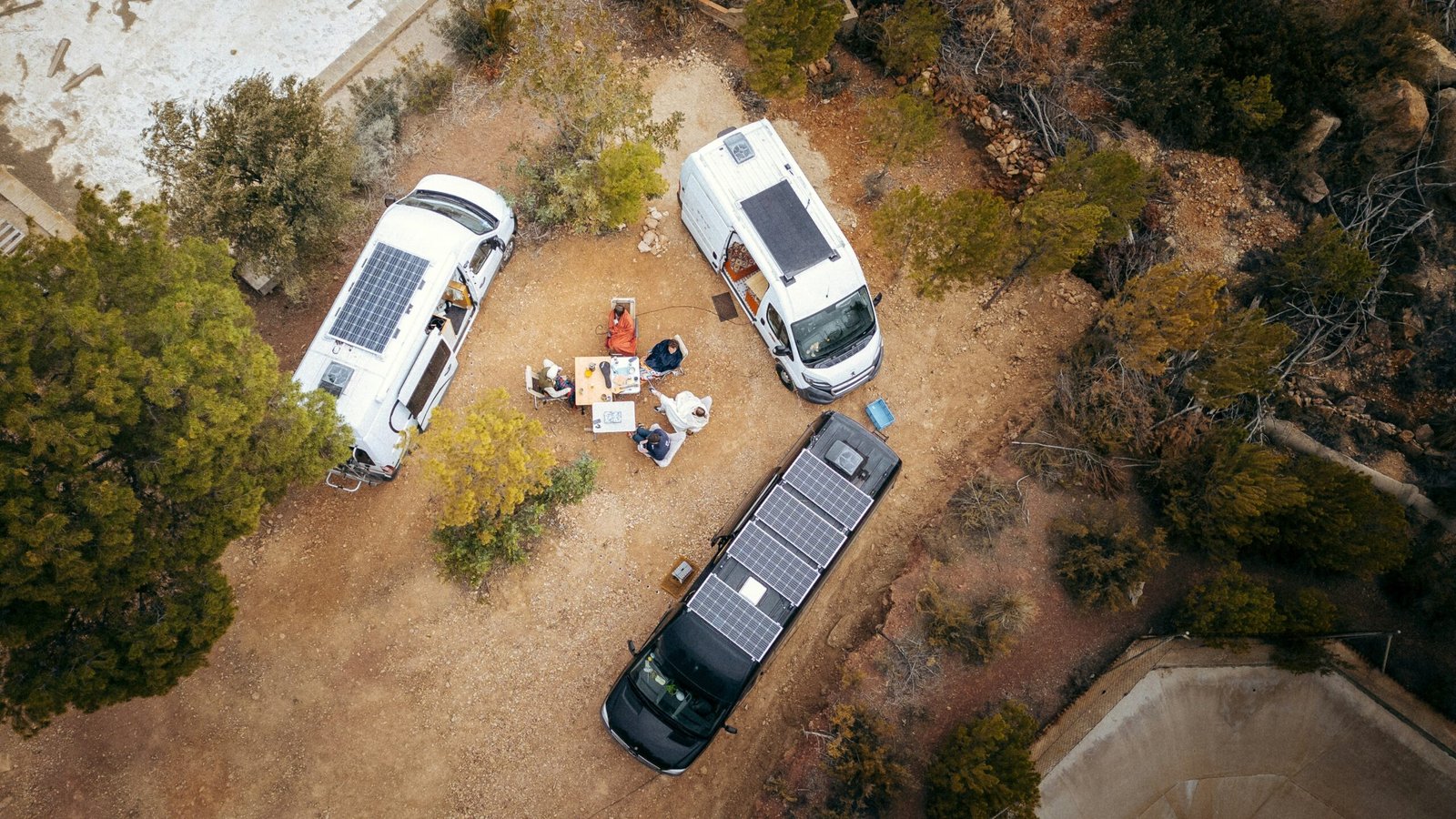
The solar setup question is the one that trips up almost every first-time van builder. Go on any van life forum and you’ll see people confidently saying “100W is plenty” right next to people saying “you need at least 600W.” Both are right — for completely different lifestyles.
The honest answer is that solar sizing is simple maths, and once you run the numbers for your actual usage, the right setup becomes obvious. Here’s how to do it.
Start Here: How Much Power Do You Actually Use?
Before buying a single panel or battery, list everything you plan to run and estimate how many hours per day you’ll use it. Here are real consumption figures:
| Device | Power draw | Hours/day | Daily Wh |
|---|---|---|---|
| Laptop (13–15″) | 45–65W | 6h | 270–390Wh |
| 12V compressor fridge | 30–50W avg | 24h cycling | 360–600Wh |
| Maxxair roof fan | 20–45W | 8h | 160–360Wh |
| LED lighting | 10–20W | 4h | 40–80Wh |
| Phone charging | 10–18W | 2h | 20–36Wh |
| Diesel heater fan | 10–25W | 8h | 80–200Wh |
| External monitor | 20–40W | 6h | 120–240Wh |
| Camera/drone charging | 20–60W | 1h | 20–60Wh |
Add up what applies to you. A simple weekend van lifer might use 300–500Wh/day. A full-time remote worker with a fridge, laptop, fan, and lights is probably at 900–1,400Wh/day.
The Three Setups — Honest About Who Each One Is For
The Starter Setup — ~$400–$700
What’s in it: 100W solar starter kit (~$89, includes panel, controller and cables), 100Ah AGM battery (~$150), 300W inverter (~$40).
What it actually powers: Phone charging, LED lights, maybe a small fan, and occasional laptop top-ups. That’s it.
Who it’s for: Weekend van lifers, people testing the lifestyle before committing to a bigger build, or vans used as a base camp rather than a full-time home. If you’re living in your van full-time, this setup will leave you frustrated within a month.
The Remote Work Setup — ~$1,800–$2,800
What’s in it:
- Two Renogy 200W panels (~$189 each = $378) — the most used van roof panel in the community
- 200Ah LiFePO4 lithium battery (~$600–$800) — the single best upgrade you can make
- Victron SmartSolar MPPT 100/30 (~$149) — industry standard, Bluetooth monitoring, genuinely useful app
- DC-DC charger (~$150) — charges your battery from the alternator while driving, essential
- 1000W pure sine inverter (~$120)
- Wiring, fuses, bus bars (~$200)
What it actually powers: Laptop for a full work day, 12V compressor fridge, Maxxair fan, all your lights, phone and camera charging. In short — everything a full-time van lifer needs.
Who it’s for: Most full-time van lifers. This is the sweet spot where you stop thinking about power and start thinking about the road.
The Premium Setup — ~$3,500–$6,000
What’s in it: 400–600W solar, 300–400Ah LiFePO4 battery bank, Victron MultiPlus inverter/charger, battery monitor.
What it actually powers: Everything above, plus a portable AC unit in summer, power tools, coffee machine, extended cloudy periods without worry.
Who it’s for: Full-time van lifers in cloudy climates (Pacific Northwest, northern Europe), couples with two remote workers, or people with high power needs. Most people don’t need this on their first build.
The Lithium vs AGM Question
This comes up constantly and the answer is genuinely clear in 2025: if you can afford lithium, get lithium.
| AGM | LiFePO4 | |
|---|---|---|
| Usable capacity | 50% (never go below 50%) | 80–100% |
| Lifespan | 300–500 cycles | 2,000–4,000 cycles |
| Weight (100Ah) | ~28kg / 62lbs | ~12kg / 26lbs |
| Price (100Ah) | ~$150 | ~$300–$400 |
| 10-year cost | High — multiple replacements | Low — one battery lasts |
A 200Ah lithium battery gives you the same usable capacity as a 400Ah AGM bank, weighs half as much, and will outlast the van. The upfront cost difference has narrowed significantly — a quality 100Ah LiFePO4 now costs $300–$400.
The Quick Sizing Formula
Once you know your daily Wh usage, the maths is straightforward:
- Daily usage ÷ average peak sun hours per day = watts of solar needed
- Add 25% for system inefficiency
- Your battery should store at least 1.5–2× your daily usage
Example: 1,000Wh daily use ÷ 4 sun hours × 1.25 = 312W of solar minimum. Round up to 400W. Battery: 200Ah lithium (usable 160–200Wh at 80% = plenty for one night).
The No-Wiring-Project Alternative
If the idea of wiring a van electrical system from scratch is putting you off van life entirely, there’s a legitimate shortcut: the Jackery Explorer 1000 Pro (~$899).
It’s a complete all-in-one power station — 1002Wh of capacity, solar input up to 400W, runs everything you need for a full day of work. Plug and play, no electrical knowledge required, and it can be charged from your van’s 12V outlet while driving. It’s not as cost-effective long-term as a built system, but it gets you on the road immediately and gives you time to figure out what you actually need before committing to a permanent build.
Common Mistakes Worth Avoiding
- Undersizing the battery. Solar charges during the day — your battery needs to store enough to get you through the night. 100Ah is rarely enough for full-time van life.
- Skipping the DC-DC charger. Without one, driving doesn’t charge your battery effectively and you risk alternator damage. It’s a $150 component that protects a $5,000+ electrical system.
- Buying flexible solar panels. They’re tempting (no drilling) but degrade significantly faster than rigid panels and run hotter. Rigid panels on a small mounting frame are better in every way except initial installation effort.
- Undersizing the wire. Always go one gauge thicker than your calculated minimum. Undersized wiring is a fire risk. This is not an area to save money.
Recommended Gear
- Renogy 200W Monocrystalline Panel (~$189) — the community standard for a reason
- Renogy 100W Starter Kit (~$89) — complete kit for beginners, everything included
- Victron SmartSolar MPPT 100/30 (~$149) — the best charge controller at this size
- Jackery Explorer 1000 Pro (~$899) — if you want power without a wiring project
- BougeRV 12V Fridge 30Qt (~$329) — the appliance that uses the most power and saves the most hassle
The Bottom Line
For most full-time van lifers working remotely, the right setup is 400W of solar + 200Ah LiFePO4 + Victron MPPT — around $1,500–$2,000 installed yourself. It handles everything without overthinking, charges reliably in 3–5 hours of decent sun, and will last years without replacement.
Start there. Monitor your usage for the first few months. Add capacity if you consistently run low. Don’t over-build on your first van — you’ll know what you actually need after living in it for a while.
→ Factor your solar build into your full van life budget at VanCalc

One thought on “Van Life Solar Setup: How Much Do You Actually Need?”